



Table des matières
Recognizing High-Impact, Low-Frequency Situations
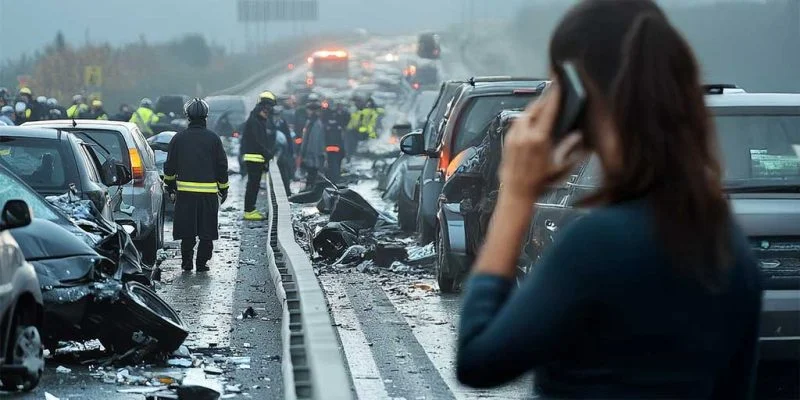
When we refer to High-Impact, Low-Frequency (HILF), which are also known as high-risk, low-probability events, we are referring to low-probability events that have the ability to create significant disruption and damage. From the perspective of the 911 and Emergency Communications Centers, HILF events can completely overwhelm and disrupt their emergency response systems in just minutes. During one of these HILF incidents, the call centers are suddenly inundated with phone calls, often in a very short window of time, with many callers calling and reporting the same HILF over and over again.
This is called a “surge” which results in a communication bottleneck and reflects real life where emergency call centers were overwhelmed with repeat reports delaying their ability to respond. During these HILF situations, people with other emergencies happening can be blocked from getting through as well, thus placing their lives at added risk in the midst of the crisis. Once the call taking telecommunicator was inundated with the “surge” of calls, communications overload/hyperstressed began, and the chain reaction of the crisis communication overload began! Impaired rescues, wastage of resources, and excessive and extreme impacts of the HILF cascaded forward.
The characteristics of HILF events make them particularly difficult for staff-only, outdated call handling agencies. Call handling manually is sometimes effective in normal circumstances. It cannot handle the presence, urgency, and volume of calls which are in a constant state of a repetitive nature. This disconnect between a capacity to operate effectively at the agency level and immediate real-time need is exactly where innovation operates as a valuable technology for communities.
The impact of these events is not exactly the same either. Urban centers may have rapid surges in calling from a highly dense population whereas rural elements may have problems with contacts and unavailable operators. Additionally, different personas are impacted in different ways–the emergency manager prioritizes resource deployment; the policy maker liability renewal and compliance; the resident just expects that their call will be answered.
AI’s Role in Public Safety
The advancement of AI for public safety has progressed from an innovative, emerging idea, to a legitimate operating necessity. AI models are being used to assist with call classification and prioritization in 911 centers and ECCs, across the country. Using machine learning and natural language processing, the AI-enhanced tools have been found to be over 90% accurate in classifying emergency calls and prioritizing the life-threatening event in real-time, allowing call-takers to spend their attention where it needs to be. The technology isn’t faster, it’s smarter. It will recognize when multiple callers provide the same information and avoid taking valuable operator time when those calls should be directed to urgent, life-threatening cases.
Moreover, AI has the capability to process vast amounts of data in real time, providing predictive insights and situational awareness to emergency managers. For example, it can detect geographic clusters of calls, infer the likely scope of an incident, and suggest resource deployment strategies that improve overall efficiency. By reducing the cognitive strain on human operators during high-stress moments, AI systems help preserve decision-making quality and response accuracy, even when call volumes are at their peak. In this way, the technology becomes a silent but indispensable partner in protecting lives during critical moments.
Localization further enhances these capabilities. For example, AI tools can be trained to detect region-specific terms or slang in emergency calls, provide automatic translation in bilingual communities, and even adapt recommendations based on geographic risks such as hurricanes in coastal states or wildfires in the West. This ensures that public safety systems remain relevant and effective for diverse populations.
Preparing for HILF Events: Strategy + Tech
Effectively managing high-risk, low-frequency events requires a proactive and layered approach that combines both strategic planning and advanced technological capabilities. Emergency agencies must go beyond the basics of standard operating procedures, implementing specialized training programs and conducting realistic simulations that mimic the chaotic conditions of actual disasters. These exercises not only prepare staff to react quickly under pressure but also reveal weaknesses in existing processes, providing opportunities for improvement before an actual event occurs.
Key preparedness strategies include:
- Establishing and routinely updating structured emergency protocols, tailored for rare but severe incidents
- Building resilience into operations by anticipating unique challenges and ensuring resources are available for rapid deployment
- Integrating assistive AI for tasks such as triage, translation, and call routing to ensure that critical communications are never delayed
By merging these strategies with the right technological tools, agencies can ensure that their communication systems remain functional and effective under the most extreme conditions. Preparedness in this context is not simply about reacting—it’s about creating the conditions to respond with speed, precision, and confidence when every second counts.
Adapting Strategies to Stakeholder Needs
Different groups prioritize distinct aspects of preparedness:
- Emergency operators value clear triage protocols and tools that reduce stress during surges.
- City officials emphasize continuity of services, reputation, and community trust.
- First responders prioritize accurate, real-time information to avoid delays on the ground.
- Residents and communities care about accessibility in their own language and the reassurance of a timely response.
Recognizing and addressing these perspectives helps create a system that works for everyone.
Why AI Is a Game-Changer for Disaster Response
When disaster strikes, speed, accuracy, and coordination become the lifelines of an effective response. AI-powered solutions give ECCs and 911 centers the ability to handle massive call surges without compromising quality or efficiency. Instead of allowing repetitive, non-urgent calls to consume valuable resources, AI can automatically categorize these reports, provide concise summaries for human operators, and direct attention to cases that require immediate intervention. This allows emergency teams to focus on life-saving actions rather than administrative overload.
The benefits of integrating AI include:
- Faster identification and prioritization of life-threatening emergencies, reducing time-to-response
- Minimization of delays caused by repetitive or non-critical reports, freeing operators for urgent cases
- AI-enhanced systems improve coordination between call centers, field responders, and support agencies by automating triage, supporting multilingual communication, and optimizing resource deployment based on real-time data.
These capabilities mean that in the midst of a crisis, AI does not just improve efficiency—it can directly influence survival rates. For communities facing rare but devastating events, the difference between having AI-enabled systems and relying on traditional methods can be measured in lives saved and damage mitigated.
Independent research backs this up. According to a 2024 Gartner analysis, municipalities that piloted AI-enabled 911 systems reduced average call processing time by 40% and improved critical case handoff accuracy by more than 30%. Similarly, discussions on platforms like LinkedIn and emergency management forums highlight how AI adoption is becoming a marker of leadership and resilience in public safety.
AnswerNet’s Disaster Response: The Smarter Alternative
À AnswerNet, we recognize that the unpredictability and severity of high-risk, low-frequency events demand a unique combination of human expertise and cutting-edge technology. Our Disaster Response service has been designed to address exactly these scenarios, offering continuous 24/7 availability, rapid scaling to meet sudden surges in demand, and the integration of AI-enhanced call triage to ensure that critical cases are never lost in the chaos. We provide real-time multilingual support, allowing us to serve diverse communities effectively, even under the most challenging conditions.
Beyond simply answering calls, our service is built to coordinate dynamically with field responders, disaster management agencies, and community resources. This ensures that information flows smoothly, resources are deployed efficiently, and emergency situations are handled with the urgency they deserve. Choosing AnswerNet’s Disaster Response means gaining a trusted partner who can maintain communication stability, protect community safety, and deliver high-quality service when it matters most. In moments where there is no second chance, our team is ready to stand with yours—ensuring no call for help goes unanswered.